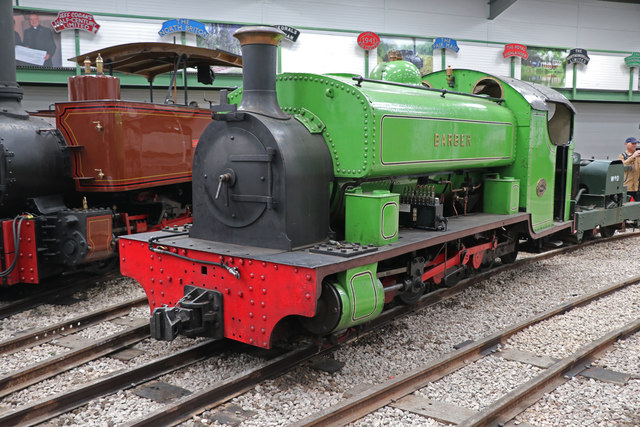
Barber is a unique locomotive, for a number of reasons. Firstly, it’s the only locomotive built by Thomas Green & Sons of Leeds to survive in the northern hemisphere – two other locomotives do survive in Australia though. It’s also the last remaining locomotive to retain the unique profile for the Harrogate Gasworks railway.

I first became aware of this line as a child – around the age if nine I got a copy of Humphrey Household’s Narrow Gauge Railways: England and the Fifteen Inch which had a chapter in the railway. The line was relatively local and as a child, narrow gauge so close to home was unknown.

The line connected the gas works to the North Eastern Railway, the decision to build it so far from the rail network was regretted and after thirty years or so of traction engines hauling coal a railway was built. To reach the site a tunnel was required in order to access New Park where the gas works was situated. The tunnel’s small size lead to the unique profile of the locomotives – this profile is still retained by Barber.
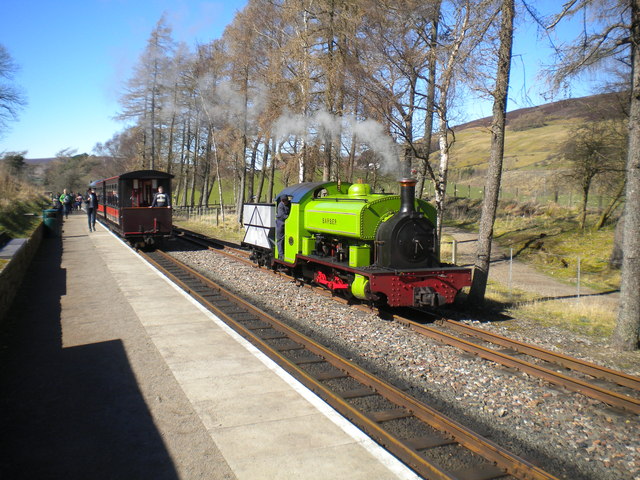
Barber was built by Thomas Green & Sons of Leeds in 1908 and is the only surviving locomotive built by them to survive in the northern hemisphere. It retains the low, rounded cab required by the Gasworks – it’s a huge part of its history and also a part of Yorkshire’s industrial and railway history.
The South Tynedale Railway has, rather quietly, announced that they intend to modify the cab for operational reasons. Sadly this will immediately lose a huge part of its history.
Another of the line’s locomotives survives, the later loco built by Peckett in 1944 – a quite sturdy, powerful looking locomotive, the low profile helping in this respect.

After many years of storage it found a home, and was eventually restored to running order, at the The Bredgar & Wormshill Light Railway who named it Harrogate. There it received a new, taller cab and a new, taller chimney. Changing it out of all recognition.
So why does this matter?
Why does it matter?
After all other locomotives have been modified – Sir Hadyn on the Talyllyn Railway received a new cab for similar reasons in the early years of preservation.
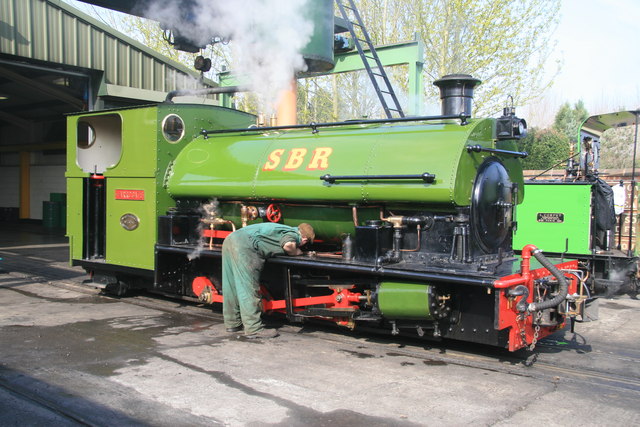
Since then the heritage sector has moved on – conservation has come to the fore and it’s not just getting things running but it’s about looking after items and also helping to tell a story. After all any visitors looking at Barber will probably notice the low height compared with the coaches they’ve travelled in. This might raise questions and the result could be they ask or otherwise find out about it’s origins and why it’s so low.
This is its raison d’etre, its whole purpose was to move coal for the Gasworks and through that very small tunnel. Its profile almost defines its story.
To lose this, loses a huge part of its history. Even making the change reversible isn’t much better – how would the original cab be stored? Would it be conserved? Would it survive intact? It would be a fairly large item taking up space?
Of course the South Tynedale Railway own the locomotive and they have every right, legally, to do with this loco as they please.
But…
I feel heritage railways have a moral obligation to maintain assets in a historical accurate and appropriate state as far as is practicable, and safe. The latter is the reasoning for the change to Barber, but it’s limited headroom is not unique, many other small locos exist and continue to work in preservation.
Maybe the lack of heritage with the South Tynedale Railway puts them at a disadvantage? Originally a standard gauge branch between Haltwhistle and Alston the original campaign to save the line was as a standard gauge line throughout to maintain it as an asset for the local area. When this proved impossible the idea surfaced for a narrow gauge heritage line. As a visitor attraction, it’s a pleasant railway, I’ve visited in the past though not for a number of years.
But as a preservation of sorts, they should do their utmost to look after their locomotives. In doing so it should not be detrimental to the items concerned.
I just hope the importance of Barber will be appreciated and it’s future as a reminder of the railway at the Harrogate Gasworks is maintained a d assured.
 Big Trains, Little Trains
I can understand your point of view as regards heritage accuracy but if the loco crews can’t operate the engine comfortably (its design must make it incredibly claustrophobic in there and the photos show the driver virtually out of the door – not great on a cold Northumbrian/Cumbrian day!) due to the low cab height surely a slight raising of the cab roof is only sensible. We want to see these engines running, don’t we, and not being hardly ever used because the crews can’t stand operating them. As for the Pecket now restored after years rusting at the FfR’s Boston Lodge yard, I think it actually looks better and more handsome with its new cab, yet though marginally taller it isn’t massively different in proportions.
LikeLike
Should locomotives loose their heritage in order to keep running?
The cramped cab hasn’t exactly come as a surprise and on social media some South Tynedale crews have reported to not be aware of any issues with Barber’s operation.
The Peckett wasn’t a pretty engine in its original form below t the squat, brutish looks it had we all part of its story, which has been lost and the casual observer won’t have any idea otherwise.
For this reason Barber’s condition should be regarded as critical to its ongoing preservation.
LikeLike